
 One of the most effective pain relievers you can buy without a prescription may be a combination of two popular over-the-counter drugs: ibuprofen (best known by the brand names Advil and Motrin) and acetaminophen (best known by the brand name Tylenol).
Taken together, ibuprofen plus acetaminophen relieved dental pain better than opioids, according to a review published in the Journal of the American Dental Association. The combination is also widely used for headaches, muscle aches, backaches and arthritis pain.
In 2020, the Food and Drug Administration approved the first over-the-counter ibuprofen and acetaminophen combination pill for the U.S., Advil Dual Action with Acetaminophen. It’s available at most pharmacies and requires no prescription. A two-caplet adult dose contains 250 mg of ibuprofen and 500 mg of acetaminophen. The label directions are 2 caplets every 8 hours, with no more than 6 caplets in 24 hours unless directed by a doctor.
If you prefer, you can buy ibuprofen and acetaminophen separately and take them together. Just be sure to follow the Drug Facts label on each package and never exceed the daily limits. For example:
Ibuprofen (such as Advil 200 mg): 1 or 2 tablets every 4 to 6 hours, and no more than 6 tablets (1,200 mg) in 24 hours unless directed by a doctor.
Acetaminophen (such as Tylenol Extra Strength 500 mg): 2 caplets every 6 hours, and no more than 6 caplets (3,000 mg) in 24 hours unless directed by a doctor.
Check the labels of any other medicines you take, too. Many cold, flu and sleep products also contain acetaminophen or an NSAID, which can push you over the limit.
Safety Tips for Seniors
Both drugs carry warnings that are especially important for older adults. Ask your doctor or pharmacist before using them regularly, especially if you take other medications.
- Ibuprofen is a nonsteroidal anti-inflammatory drug (NSAID). Its label warns that the chance of severe stomach bleeding is higher if you are 60 or older, have had stomach ulcers or bleeding, take a blood thinner or steroid, or have three or more alcoholic drinks a day. NSAIDs can also increase the risk of heart attack and stroke, and may not be right for people with heart disease, high blood pressure or kidney problems.
- Acetaminophen can cause severe liver damage if you take more than the maximum daily amount, take it with other acetaminophen products, or have three or more alcoholic drinks a day.
Why the Combination Works
The combination of the two medications works better than either one alone because they relieve pain in different ways, according to the maker of Advil Dual Action.
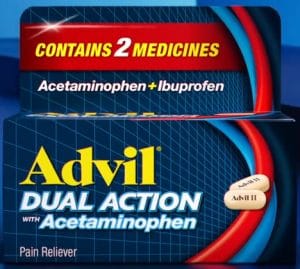 “Ibuprofen is a nonsteroidal anti-inflammatory (NSAID) that targets pain at the source, temporarily reducing the production of prostaglandins, which cause swelling and pain signals. Acetaminophen is a pain reliever that blocks the transmission of pain signals to the brain,” GlaxoSmithKline said in its 2020 press release announcing FDA approval. (Advil is now made by Haleon, the consumer health company spun off from GSK in 2022.)
“For decades, many consumers have been using ibuprofen and acetaminophen to get the benefits of both active ingredients when safely treating their headaches, muscle aches, backaches, arthritis and other joint pain,” said Franck Riot, then head of research and development for GSK Consumer Healthcare. “[Advil Dual Action] will offer U.S. consumers the first-ever alternative option – a single, fixed-dose combination pain reliever.”
For more details visit:
Advil Dual Action Web Page with customer reviews
Advil + Tylenol Better Than Opioids for Oral Pain, WebMD
Is It Safe to Take Tylenol (Acetaminophen) With Advil or Motrin (Ibuprofen)? – GoodRx
Below is an introduction to Advil Dual Action.
https://youtu.be/L0kb0VEK9Bo
This article is for general information and is not medical advice. Talk with your doctor or pharmacist about which pain reliever is right for you.